


Proof of Life
Updated: Jun 29
AI can copy; it can’t connect.
By Grace Thompson
AI: Artificial Intelligence
Not too long ago, I was sitting on the patio at Chico Feo, where each table has an open-door policy and, most of the time, everyone’s bound by a shared love of music.
Or so I thought.

My mantra with music is that it’s not only something to listen to but something to sit with until you feel like you understand it. That’s when the best conversations happen, exchanges that give everything more weight. So that same night, when a man I’d noticed mouthing lyrics during the set sat down across from me, I expected a connection.
But instead, unprovoked, he began to tell me that he runs an AI company built to generate songs and artists. The very expressive person that I am, I believe that I grimaced.
After a few minutes or so of being spoken at, I simply asked what that meant for concerts, live performances, and ironically, the very event that we were sitting in the middle of.
Holograms.
I argued that the exchange between artist and crowd, the give and receive of it, can’t be manufactured.
Music is the only universal language, the one thread that runs through all of us.
Why reduce it to a simulation?
He talked about perfection; music without mistakes. “Oh, so the human side,” I replied. Each point he made crushed me, and I told him so.
That night stayed with me as a weird bar story, but then in July, The Atlantic published a piece about the Velvet Sundown, a so-called band created entirely by AI, complete with songs, lyrics, album art, and even photos.
On Spotify, Velvet Sundown was pulling in hundreds of thousands of monthly listeners. Johnny Delaware showed up as a “related artist,” as if he were another digital fabrication.
The article described Velvet Sundown’s music as neither good nor bad, but nothing. That word stuck with me. Because what AI is producing isn't just forgettable; it's hollow, sound without a soul.
And worse, it casts doubt on whether the artists beside it are even real.
That’s what unsettles me most: AI doesn’t just create fake bands; it makes people question whether musicians like Johnny Delaware exist at all.
AI: Authentic Individual
Johnny Delaware
I first met Johnny Delaware at The Space, Ryan “Wolfgang” Zimmerman’s studio in downtown Charleston. Johnny was recording a song called “New Orleans” while wearing two different socks and cracking jokes in between takes.
Give him five seconds, and he proves how human he is; unguarded, funny, impossible to mistake for anything else. The kind of presence you don’t forget.
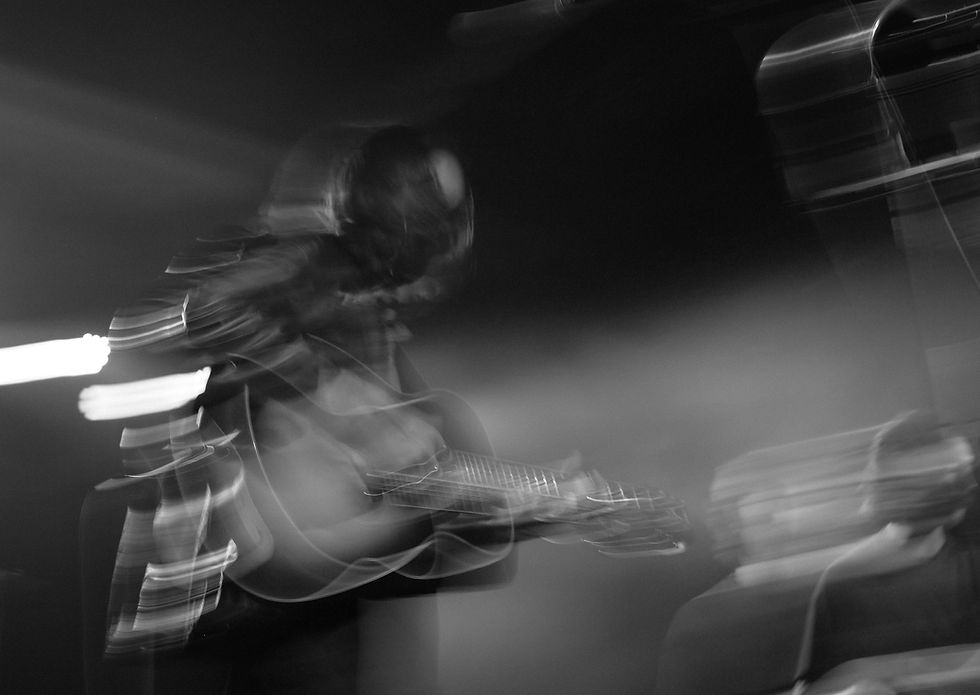
A few weeks later, we caught up again at Music Farm. I walked in during soundcheck, where Johnny was already on stage with Tommy Merritt and Drew Lewis, both of Tounds.

“You know when you pull your buddies up on stage, and it’s just fun ... it’s supposed to be loose.”
Before the show, Johnny was outside the venue with a suitcase cracked open on the sidewalk, digging for deodorant and an electric shaver. It was the kind of unfiltered, funny moment that makes him so easy to be around; nothing curated, just himself. We left soon after for a drink at the Rarebit, where he borrowed a piece of paper from the bar and began writing out his setlist. By the time he was done, condensation from his glass had already smudged the ink.
Back at the venue, Johnny felt like the counterpoint to that conversation about AI. Where that man talked about holograms and flawless songs, Johnny’s set played out with the kind of things you can’t script.
He tried out something unreleased, then turned to the crowd and said, “Guys, be honest, was that song shit?”
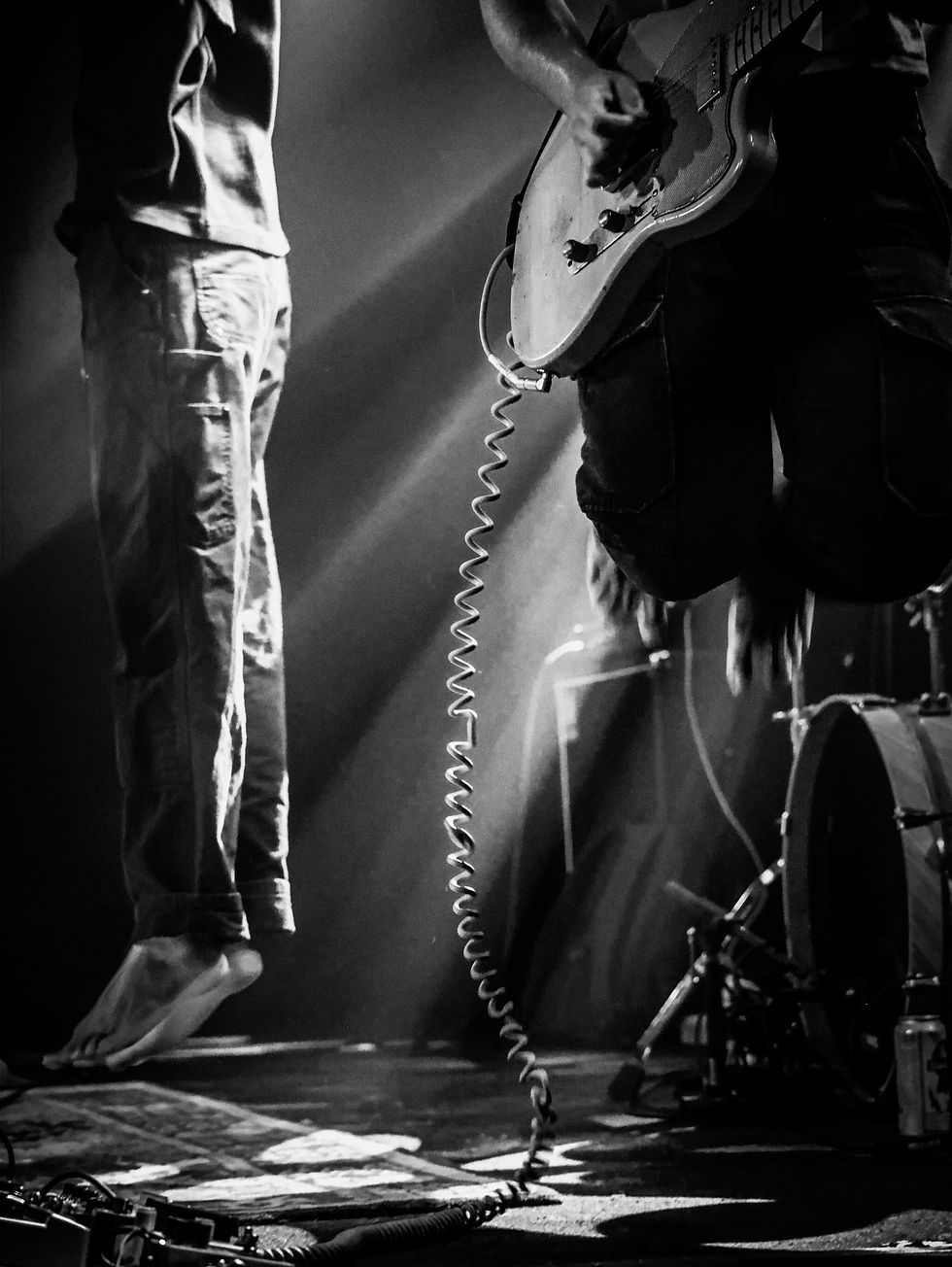
It was music happening in real time; unpredictable, present, and shared by everyone in the room.
Tommy Merritt and Connor Hollifield
Friends were spread from the front rail to the back bar, singing along to “Sweet” from Secret Wave while others hugged and swayed together. Banter moved both ways, Johnny from the stage and his friends from the crowd, trading lines like it was all part of the set. At one point, he said, “No one does that music video shit anymore. Well, I rode a horse in mine,” referring to the video for “Energy of Light.”
It was proof of what AI gets wrong: music isn’t just sound, it’s people, and a night that only exists because we were all there.
Also, Johnny, if you’re reading this, you still owe me ten dollars.
Photography by Sierra Bowman for Enemy Magazine.


Comments