


playlist: 𖡼𖤣𖥧𖡼𓋼𖤣𖥧𓋼𓍊
- Oct 15, 2025
- 4 min read
Updated: Apr 30
It’s hard to explain what holds these songs together. They come from different corners and decades, but somehow they all feel like they were made in the same light: soft, shifting, making everything feel older than it is.
I play them when things are quiet but still moving. When the day feels open and a little strange. They sound like memory, but not in a nostalgic way; more like something that keeps resurfacing, familiar but hard to name. Some of them hum, some drift, some sound like they were recorded in another room. Together, they make sense.
It’s not a playlist I built on purpose, but it’s just what stuck...


In 1975, John Schwab and his band Mad Anthony recorded a handful of songs in a barn in Southern California. They were close to a record deal that never happened, and the tapes ended up in a box for decades. The songs sat there, untouched, until his son Ben found them years later in Ohio.
By then, Ben had already been making music of his own, studying at CalArts, playing in Golden Daze and Drugdealer. Finding those recordings felt familiar in a way that’s hard to explain. They sounded like home, even though he hadn’t heard them before.
Those tapes became a reference point for what turned into Sylvie, a project Ben started with friends in Los Angeles. His dad’s voice appears on one of the songs (50/50). It’s not framed as a tribute, more like a continuation. The tone, the pace, the way both projects were made, they line up naturally.
Mike Collins of Drugdealer described the Mad Anthony recordings as “timeless, effortless, and soulful. A harmonic birthright.” That line fits. The connection between Mad Anthony and Sylvie isn’t just musical, but it’s proof that a sound can stay alive if someone’s willing to listen closely enough to find it again.

When I first heard Mad Anthony’s “Take Care of Yourself” my mind immediately went to John Mayer’s "Hummingbird" from the As/Is: Live In Philadelphia, PA/Hartford, CT - 8/14-8/15/04. The playing feels similar between the two, but the tones are miles apart, Mayer’s is brighter; Mad Anthony’s has that dusty, aged texture that comes from tape.
It’s subtle, but it’s there. It’s not the same melody, just a similar shape. I’d call it a kind of extrapolation, like Nicc Johnson describes: when a sound or idea grows into something new rather than being directly borrowed. The songs exist separately, but in my head, they feel connected. I like that I can listen to something older, like Take Care of Yourself and hear traces of the same feeling in a newer song like Hummingbird.


The Female Species were sisters Vicki and Ronni Gossett, teenagers from Southern California who started writing and recording together in the late sixties. They never became a household name, but their songs carry this grounded sort of honesty: clean harmonies, thoughtful arrangements, lyrics that feel almost too sincere for how young they were. The Numero Group later pulled those recordings together as Tale of My Lost Love, finally giving them the release they deserved.
“Coast to Coast” is the one I’ve been figuring out on piano recently and it’s one of those songs that feels simple until you really play it. I keep coming back to the lyrics, too, they’re pretty straightforward, but they hold a certain weight and familiarity to me.
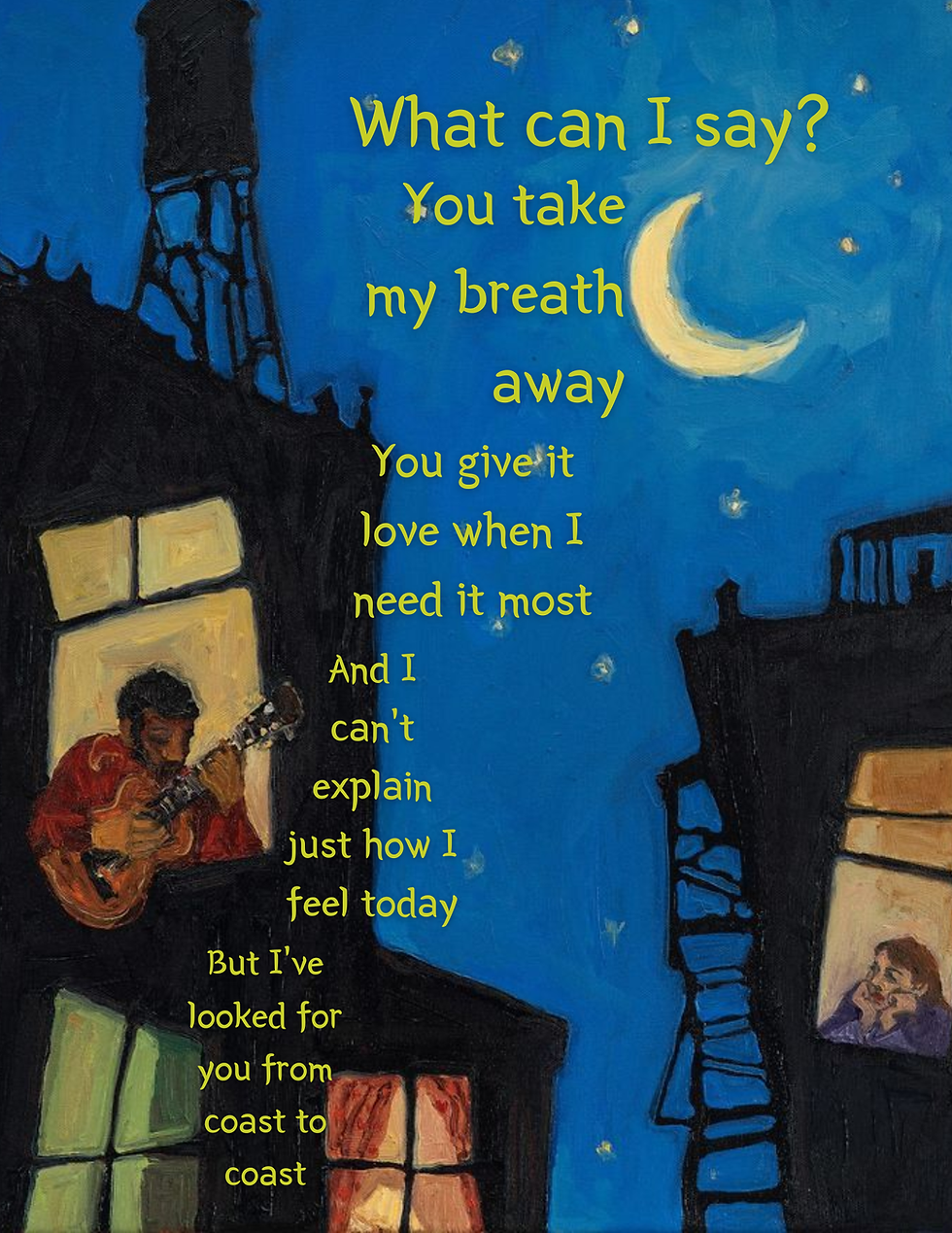
“Time” is another one that stands out. The rhythm section keeps everything moving, and at 2:40 there’s this short stretch where the vocals and drums fall into step together — it’s such a small thing, but it says a lot about how tightly they played. Vicki led on vocals and guitar; Ronni handled harmonies and keys. Together they built something that sat between girl-group polish and soft-psych looseness, similar to The Feminine Complex or Margo Guryan.

Flashing forward to now, you really do need to look at artists like Clairo, especially on her recent album Charm. She’s paying such an homage to this sound, not just copying the tone, but really understanding what makes it work. The theory, the structure, the patience. It’s what gives the record that same balance between warmth and precision. The El Michels Affair’s production and Homer Steinweiss’s drumming only sharpen that feeling, everything feels live, studied, and intentional. A lot of artists skip those fundamentals now, but Charm leans into them. It’s not trying to be old; it’s just grounded in what’s always made this kind of music timeless.


What I love about putting all these songs together is how naturally they speak to one another. Different decades, different textures, but the same kind of honesty running through. It reminds me that music doesn’t always evolve forward...sometimes it folds back, echoing something that was already there. These aren’t just songs I listen to when I’m moving; they’re the ones that keep me still long enough to notice what’s around me.
Go give it a listen :)

Comments